Revenge Quitting: The 2026 Workplace Trend You Already Saw Coming
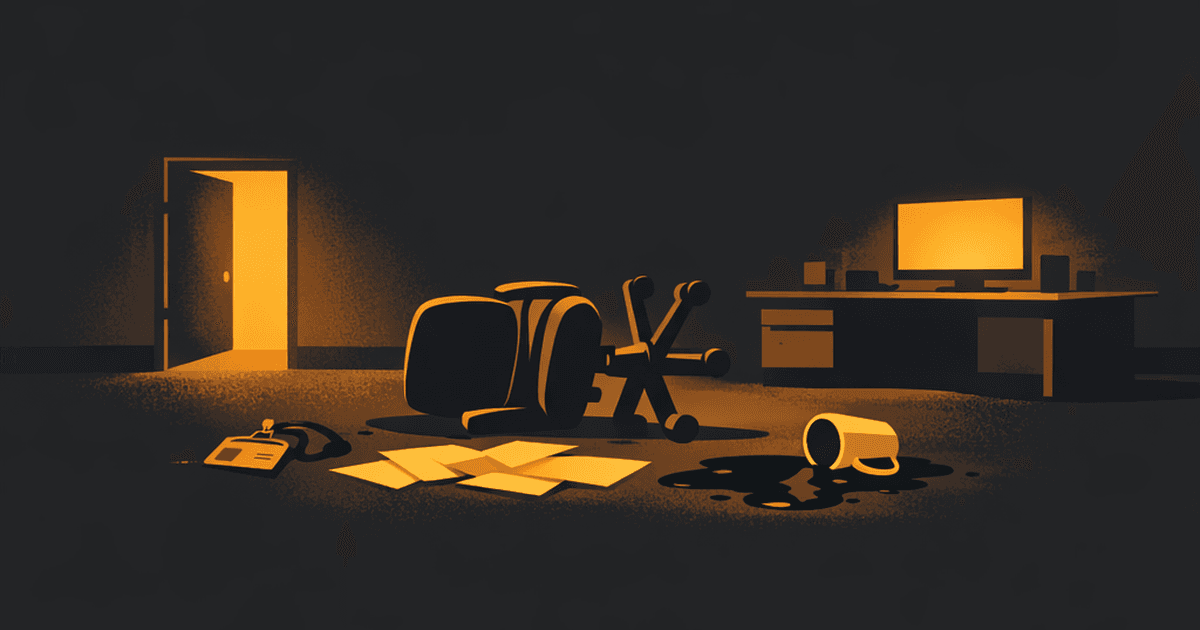
They didn't slowly disengage. They didn't start doing the bare minimum. They didn't post vague LinkedIn updates about "knowing their worth."
They walked in on a Tuesday, dropped their badge on the desk, and said "I'm done."
No two-week notice. No transition plan. No carefully worded resignation letter. Just gone — and they seemed perfectly fine about it.
Welcome to revenge quitting. It's the biggest workplace trend of 2026, and someone at your office is about to do it.
What Is Revenge Quitting?
Revenge quitting is when an employee walks away from their job abruptly — often without notice — as a deliberate response to feeling undervalued, disrespected, or pushed past their limit. It's not the gradual fade of quiet quitting. It's not the slow-burn job search of a typical resignation. It's a statement.
The person doesn't just leave. They leave in a way that says I'm choosing to make this inconvenient for you.
Nearly half of all workers — 47% — have quit a job without giving notice, according to a Monster survey that made headlines in late 2025. That number sent HR departments into a panic. It shouldn't have. Anyone who's been paying attention at their own office has already seen it happen.
Why 2026 Is the Year of Revenge Quitting
Revenge quitting isn't new. People have been rage-quitting jobs since the invention of jobs. What's new is the scale and the shift in who's doing it.
The Great Detachment
After the Great Resignation of 2021-2022, companies expected the pendulum to swing back. They froze hiring, clawed back remote work, and assumed employees would be grateful to have jobs in a tighter market.
Instead, something worse happened. Employees stayed — but checked out. Gallup calls it the "Great Detachment." Record-low engagement. Record-high resentment. Millions of workers sitting at their desks, doing their jobs, seething quietly.
The Great Detachment is a pressure cooker. Revenge quitting is what happens when the lid blows off.
The Loyalty Paradox
Here's the part that catches everyone off guard: revenge quitters aren't the disengaged ones. They're the loyal ones.
The Monster survey found that the majority of revenge quitters had been with their company for two or more years. These aren't job-hoppers. These are the people who stuck it out through the layoffs, covered for departed colleagues, took on extra work without extra pay, and believed it would eventually be recognized.
When it isn't — when the promotion goes to someone else, or the raise is a cost-of-living adjustment that doesn't keep up with inflation, or the return-to-office mandate arrives after two years of "we trust you to work from home" — the betrayal hits harder because they invested more.
The quiet quitter never cared enough to feel betrayed. The revenge quitter cared too much.
The Trigger Events
Revenge quitting almost always has a specific catalyst. It's not an accumulation — it's a last straw. The most common triggers in 2026:
The RTO mandate. Companies forcing full-time return-to-office after years of remote work. This one generates the most sudden departures because it feels like a broken promise.
The passed-over promotion. Especially when the person who gets it has less experience, less tenure, or was hired from outside while internal candidates were "still developing."
The AI anxiety play. "Your role is evolving" is corporate speak for "we're evaluating whether AI can do your job." When people feel their position is being quietly evaluated for elimination, some decide to leave on their own terms rather than wait.
The workload creep. Three people used to do this job. Now it's one. The budget for the other two went somewhere, but not to the person doing triple duty. At some point, that math stops adding up.
The public disrespect. Getting called out in a meeting. Being CC'd on a criticism. Having credit taken publicly. These moments crystallize months of simmering frustration into a single decision.
How to Spot a Revenge Quitter
Here's where it gets interesting — and useful, if you're the type who pays attention to office dynamics.
Revenge quitters are harder to predict than quiet quitters or loud quitters because they don't follow the usual disengagement arc. They're often fully engaged right up until they're not. But they give off specific signals if you know what to look for.
Signal 1: The Sudden Calm After a Storm
A coworker who was visibly frustrated about something — a denied raise, a policy change, a reorganization — suddenly seems fine. Not gradually better. Overnight fine. Like a switch flipped.
This is one of the most reliable revenge quitting signals. They haven't made peace with the situation. They've made a decision. The anger is still there — it's just been redirected into an exit plan.
Signal 2: The Documentation Sprint
They're saving files. Downloading old emails. Exporting contact lists. Cleaning up their personal items at their desk in small, non-obvious increments. A revenge quitter doesn't want to come back for a box. They want to walk out clean.
If you notice someone's desk getting gradually more bare over two weeks, they're not redecorating.
Signal 3: The Relationship Audit
They start having longer, more personal conversations with coworkers they actually like — and shorter, more transactional ones with everyone else. They're saying goodbye without saying goodbye. They're selecting which relationships to preserve across the transition.
Signal 4: The Unusual Hours
Revenge quitters often shift to unusual work hours in the weeks before they leave. Coming in early, leaving early. Or staying late but producing less. The schedule shift usually means they're fitting interviews, calls with recruiters, or meetings at the new company into their day.
Signal 5: The Confidence Spike
This is the counterintuitive one. A coworker who has seemed frustrated or beaten down for months suddenly starts speaking up in meetings, pushing back on decisions, saying what they really think. They've stopped self-censoring because the consequences don't matter anymore. They already have one foot out the door.
When someone who's been holding back suddenly stops holding back, that's not a second wind. That's someone who's already quit in their head.
The Two-Week Window
Most revenge quitting timelines are brutally short. Unlike quiet quitting's 6-12 month arc, revenge quitting collapses into a 2-4 week window from decision to departure.
Week 1: The trigger event. Something happens that tips the scale from "I'm frustrated but staying" to "I'm done." The emotional shift is immediate. The logistics take a little longer.
Week 2: The active job search — or the acceptance of an offer they'd been half-heartedly considering. Revenge quitters often already have options because they're the competent, loyal employees that other companies want.
Week 3: The signals appear — the calm, the documentation sprint, the confidence spike. This is the prediction window. If you're watching, this is when you see it.
Week 4: The departure. Minimal notice or none at all. The defining characteristic: they don't seem sad about it. They seem relieved.
Why This Matters for Predictions
Revenge quitting fundamentally changes the prediction game because it violates the usual assumptions.
Most people predict departures by watching for the classic signs — the LinkedIn update, the long lunches, the gradual disengagement. Those signals work great for conventional job-hoppers.
But revenge quitters skip the slow fade. They go from "committed employee" to "gone" in weeks. Predicting them requires reading a different set of signals: frustration levels, trigger events, loyalty that's starting to feel unrewarded.
The person most likely to revenge quit at your company isn't the one who's been phoning it in for months. It's the one who's been giving 110% and just found out it doesn't matter.
That's a harder prediction. But it's worth more points — because nobody else sees it coming.
Ready to Call It?
You know who it is. The coworker who's been carrying the team, covering for the layoffs, staying late — and just got passed over. They seem fine now. Suspiciously fine.
That's not acceptance. That's a countdown.
Office Dead Pool is the workplace prediction game that rewards exactly this kind of insight. Nominate them. Pick the date. When they walk out on a Tuesday with no notice, you'll have proof you called it.
The revenge quitter's two-week window is your scoring window. Don't waste it.
Office Dead Pool is a free workplace prediction game — where your instincts earn you points. No real harm, no real malice — just the game everyone's already playing, with a scoreboard. What is it? | Quitting styles explained | 12 signs to watch | See the rules
You Might Also Like
Quiet Quitting, Loud Quitting, and the Art of Predicting Who's Next
Quiet quitters do the minimum. Loud quitters burn it down. Both are predictable if you know what to look for — and there…
12 Signs Your Coworker Is About to Quit (And How to Predict It)
The LinkedIn photo update. The long lunches. The sudden positivity. Here are 12 signs your coworker is about to quit — a…
What Is an Office Dead Pool? The Workplace Prediction Game Explained
Born during the dot-com bust, Office Dead Pool turns workplace gossip into a competitive sport. Predict who's leaving, e…